
Treatment Guide
Benign Lesions Removal
Sebaceous Hyperplasia
Sebaceous hyperplasia refers to small, soft, yellowish bumps that develop when oil-producing glands in the skin become enlarged — most common on the forehead, nose and cheeks from your 40s onwards. They’re completely benign and harmless, but their raised, yellowish appearance is a common cosmetic concern clients want addressed. Using Fotona’s Er:YAG laser, these lesions can be precisely and effectively treated, offering significant cosmetic improvement with a low recurrence rate.
Seborrheic Keratosis
Seborrheic keratoses are extremely common, harmless, wart-like growths that tend to appear with age — they’re not related to sun damage and cannot become cancerous. That said, because they can occasionally resemble other lesions, they’re properly assessed before treatment. Once confirmed as a straightforward seborrheic keratosis, they can be effectively removed using precision laser treatment.
Skin Tags
Skin tags are small, soft, harmless growths of skin, commonly found in areas of friction such as the neck, underarms and eyelids. They carry no health risk and are removed purely for cosmetic comfort or preference, using quick, precise laser treatment with minimal downtime.
Skin Growths (Warts & Verrucae)
Common warts and verrucae are benign skin growths caused by the human papillomavirus (HPV), most often appearing on the hands and feet. They can be stubborn, particularly when they’ve resisted topical treatments or cryotherapy (freezing), and laser treatment offers an effective alternative for these more persistent cases. Using precision laser technology, the wart tissue is carefully ablated, offering a higher success rate than many over-the-counter or pharmacy treatments for lesions that haven’t responded to other approaches. As with any wart treatment, some lesions may need more than one session, and there’s a modest chance of recurrence, which we’ll discuss honestly at consultation.
Xanthelasma
Xanthelasma are soft, yellowish plaques that develop on or around the eyelids, caused by a build-up of cholesterol deposits beneath the skin. They’re entirely benign and painless, but because they don’t resolve on their own and tend to slowly grow over time, many clients choose to have them removed for cosmetic reasons. Using Fotona’s Er:YAG laser, xanthelasma can be precisely ablated with excellent clearance rates, avoiding the higher scarring risk associated with surgical excision. Worth knowing: while xanthelasma can appear in people with entirely normal cholesterol, they’re also a recognised marker sometimes associated with high cholesterol (hyperlipidaemia) — so if this is your first time developing them, it’s genuinely worth mentioning to your GP, who may suggest a simple cholesterol check alongside your cosmetic treatment here.
Fibroma
Fibromas are firm, benign growths of fibrous tissue that can develop anywhere on the body, often confused with skin tags but structurally quite different. Where skin tags are typically soft and hang from a narrow stalk, fibromas are firmer, with a broader base and deeper attachment into the skin — which is exactly why they need a different treatment approach. Rather than the gentler Nd:YAG technique used for skin tags, fibromas require Er:YAG laser ablation to precisely and completely remove the deeper lesion while minimising heat spread to surrounding tissue, supporting cleaner healing and a lower risk of scarring than surgical excision.
Milia
Milia are small, hard, white or yellowish bumps that form just beneath the skin’s surface, most commonly around the eyes, cheeks and nose. Unlike a spot or blackhead, milia are tiny cysts filled with trapped keratin rather than a blocked pore, which is why they don’t respond to typical spot treatments and can be stubborn to shift with topical products or manual extraction alone. Laser treatment offers a precise, minimally invasive alternative — particularly useful for milia in delicate areas like around the eyes, where manual extraction carries more risk of irritation or scarring, and for milia en plaque (multiple milia grouped together), which tends to be especially resistant to conservative treatment.
Epidermal Naevi
Epidermal naevi are worth explaining clearly, since the name is easily confused with the pigmented moles (melanocytic naevi) we don’t currently treat on this page — they’re a genuinely different type of lesion. Epidermal naevi are made of overgrown skin (epidermal) cells rather than pigment-producing cells, usually present from birth or early childhood as a slightly raised, textured patch of skin. Because they’re not pigment-cell lesions, they don’t carry the same melanoma-risk assessment considerations that pigmented moles do. Superficial epidermal naevi can be treated with precision laser ablation to reduce their raised texture and improve overall skin appearance.
Syringoma
Syringomas are small, benign, skin-coloured or yellowish bumps that develop from the sweat gland ducts, most commonly appearing in clusters around the lower eyelids, though they can also appear on the neck, chest and elsewhere. They’re harmless and tend to persist and gradually enlarge over time without treatment, and can sometimes flare during hormonal changes such as pregnancy. Laser ablation using Er:YAG is a well-established, effective approach for syringomas, particularly around the delicate eyelid area, offering precise removal with a good cosmetic outcome even for more established or clustered lesions.
How Laser Lesion Removal Works
Laser lesion removal uses a precise Er:YAG laser to gently and accurately remove the raised tissue of the lesion, layer by layer, without damaging the surrounding healthy skin. Unlike surgical excision, there’s no cutting, no stitches, and minimal bleeding — the treated area typically heals with a small, clean wound that closes quickly, reducing the risk of noticeable scarring compared with older removal techniques.
What to Expect
Treatment is quick, often taking just minutes per lesion, with local numbing available if needed for comfort. There’s minimal downtime — the treated area typically forms a small scab that heals within one to two weeks, during which it’s important to keep the area clean and avoid picking at it. Most lesions are fully resolved in a single treatment, though larger or more stubborn lesions may occasionally need a follow-up session. Xanthelasma around the eyelids may need a slightly longer healing window (around 6–8 days) and, for more extensive plaques, is sometimes treated over a short course of sessions rather than a single visit, given the more delicate skin in this area.
Treatment FAQs
No – sebaceous hyperplasia is an enlarged oil gland rather than a blocked pore or infected spot, which is why it doesn’t respond to typical acne treatments and needs a different approach.
No – seborrheic keratoses are not cancerous and cannot become cancerous, though they’re still checked before treatment since they can occasionally resemble other lesions that need a closer look.
For suitable lesions, laser removal avoids cutting and stitches, typically heals with less visible scarring, and involves less downtime than surgical excision — though the right method depends on the specific lesion, which we’ll discuss at consultation.
Most clients heal with minimal to no visible scarring, though this can vary depending on the lesion’s size, location, and your individual skin – we’ll give you a realistic picture at consultation.
Most lesions are fully resolved in a single session; larger or more established lesions occasionally need a follow-up treatment.
Yes – laser treatment is often effective for warts that haven’t responded to topical treatments or cryotherapy, though as with any wart treatment there’s a modest chance of recurrence, since the underlying virus can sometimes remain in surrounding tissue.
Not necessarily – Xanthelasma can appear in people with completely normal cholesterol levels, but they’re also a recognised marker sometimes linked to hyperlipidaemia, so if it’s your first occurrence, it’s worth mentioning to your GP for a simple check alongside your cosmetic treatment.
There’s a modest chance of recurrence with any xanthelasma treatment method, laser included, particularly if an underlying cholesterol issue isn’t addressed – we’ll discuss this honestly at consultation.
Skin tags are soft and hang from a narrow stalk; fibromas are firmer, with a broader base and deeper attachment into the skin. This structural difference is why they need different laser techniques of laser use.
Milia are trapped keratin cysts beneath the skin’s surface, not a blocked pore or spot – this is exactly why typical spot treatments, cleansers, or exfoliants don’t shift them, and why professional removal is often the most effective option.
No – despite the similar name, epidermal naevi are made of overgrown skin cells, not pigment-producing cells, so they don’t carry the same melanoma-risk assessment considerations as pigmented moles.
Yes – Er:YAG laser is a well-established, precise approach for periorbital syringomas specifically, offering good cosmetic results even for more established or clustered lesions in this delicate area.
Precision laser removal of benign skin lesions is well supported in the dermatological literature. A published review specifically evaluating Er:YAG laser treatment of sebaceous hyperplasia — using the same Fotona SP Dynamis platform available at Eva Clinic — found very significant cosmetic outcomes with a low recurrence rate and minimal adverse effects. Separate comparative research has found Er:YAG laser treatment to be an effective and safe option for seborrheic keratosis removal, with studies directly comparing it against cryosurgery (freezing). For stubborn warts and verrucae, Er:YAG laser has been shown in clinical research to be an effective treatment for recalcitrant warts that haven’t responded to other approaches, with a randomised controlled trial finding that combining Er:YAG with long-pulsed Nd:YAG laser achieved significantly higher clearance rates than Er:YAG alone. Recurrence remains a recognised possibility across all wart treatment methods, with published recurrence rates for laser treatment reported across a range depending on lesion characteristics and technique. For xanthelasma, a randomised comparative study found Er:YAG laser achieved complete clearance in 70% of patients compared with 25% for chemical peel (trichloroacetic acid) treatment, with a lower recurrence rate; a separate large case series of 214 patients treated with Er:YAG laser (using the same laser type as Eva Clinic’s SP Dynamis platform) found complete lesion removal with a 10.5% recurrence rate and minimal complications. Er:YAG laser is also well established for fibroma removal, with a large clinical series of over 1,200 Er:YAG treatments reporting excellent results for eyelid fibromas removed in a single session, and further published literature supporting laser ablation as a minimally invasive, typically suture-free approach for fibroma removal generally. For milia, published case research specifically evaluating Er:YAG laser ablation for stubborn periocular milia en plaque found near-complete resolution with no scarring, dyspigmentation, or complications, supporting laser treatment as a precise, low-risk option for milia in this especially delicate area. For syringoma, a novel Er:YAG ablation method developed specifically for periorbital syringoma achieved good cosmetic results even in the most difficult, plaque-type cases; a separate study combining Er:YAG laser with botulinum toxin — using the same Fotona SP Dynamis device available at Eva Clinic — found significant improvement in syringoma severity scores with reduced treatment numbers compared with earlier reported methods.
Sources: – Treatment of Sebaceous Hyperplasia by Laser Modalities: A Review of the Literature and Presentation of Our Experience With Er:YAG (using Fotona SP Dynamis), Journal of Drugs in Dermatology (2020): https://jddonline.com/articles/treatment-of-sebaceous-hyperplasia-by-laser-modalities-a-review-of-the-literature-and-presentation-o-S1545961620P0547X/ – Effectiveness of erbium:YAG laser and cryosurgery in seborrheic keratoses: randomized, prospective intraindividual comparison study, Gurel & Aral (2015), Journal of Dermatological Treatment — referenced via PMC: https://www.ncbi.nlm.nih.gov/pmc/articles/PMC11107074/ – Successful use of picosecond laser treatment for seborrheic keratosis in three Asian patients (PMC): https://www.ncbi.nlm.nih.gov/pmc/articles/PMC11107074/ – Erbium-YAG Laser Treatment for Recalcitrant Warts: A Retrospective Analysis, Jiryis et al. (2024), Dermatologic Therapy: https://onlinelibrary.wiley.com/doi/full/10.1155/dth/1890940 – Evaluation of combined treatment with Er:YAG laser and long-pulsed Nd:YAG laser for the treatment of recalcitrant warts: A prospective randomized controlled trial, Jiryis et al. (2023), Journal of the European Academy of Dermatology and Venereology: https://onlinelibrary.wiley.com/doi/full/10.1111/jdv.19388 – Wart removal without anesthesia using long-pulse 1064-nm Nd:YAG laser, Zorman et al. (2021), Journal of Cosmetic Dermatology: https://onlinelibrary.wiley.com/doi/full/10.1111/jocd.13593 – A Clinical and Dermatoscopic Perspective of the Efficacy and Safety of Erbium:YAG Laser Ablation Versus 50% Trichloroacetic Acid for the Management of Xanthelasma Palpebrarum (PMC): https://pmc.ncbi.nlm.nih.gov/articles/PMC11086933/ – Effective treatment of xanthelasma palpebrarum using Er:YAG laser (214 patients, 457 lesions) (PubMed): https://pubmed.ncbi.nlm.nih.gov/39757282/ – Er:YAG Laser Therapy for
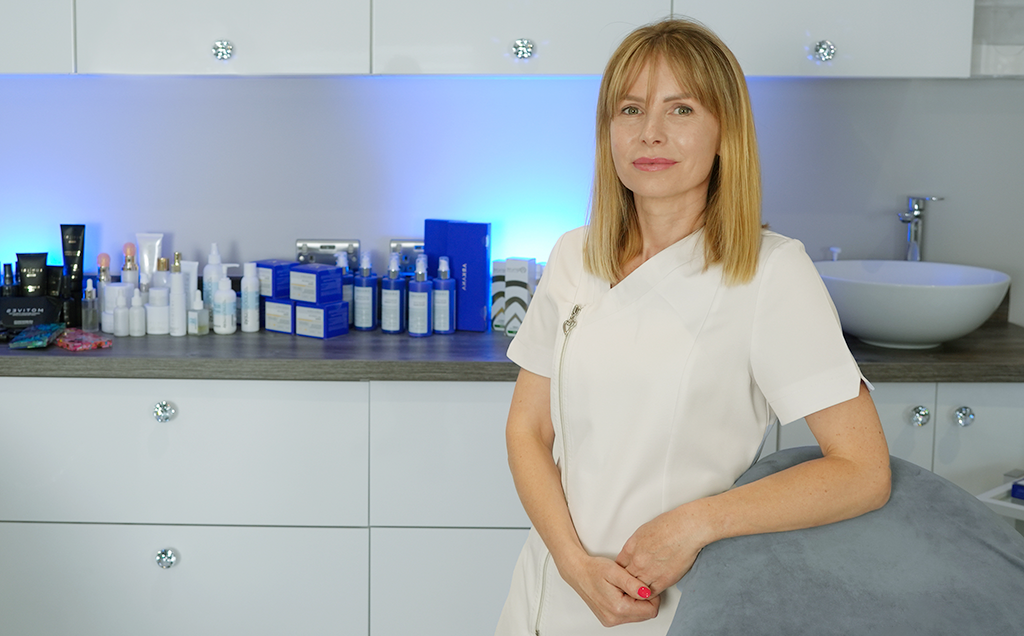
Professional consultation
Treatment compatibility is uppermost and I always undertake a professional consultation before undertaking Aesthetic treatments.
Please contact me on 07507 420244 to discuss any of my treatments and arrange an initial consultation.
