
Treatment Guide
Active Acne, Rosacea & Scarring
Understanding Acne, Rosacea & Scarring
Active acne, rosacea, and the scarring they can leave behind are among the most common – and most emotionally difficult – skin concerns clients bring to the clinic. Because these conditions have multiple, often overlapping causes (inflammation, excess oil production, bacterial imbalance, and for some clients, underlying gut health), the most effective approach usually isn’t a single treatment, but a combination tailored to what’s actually driving your skin’s behaviour.
Our Treatment Approach: Treating the Skin From Multiple Angles
At Eva Clinic, active acne, rosacea and scarring are treated using a combination of advanced technologies – laser, microneedling, polynucleotide mesotherapy, and Glacial® fx cryomodulation – chosen and combined based on your specific skin, the type of scarring present, and how your skin responds. For some clients, this is also supported by looking at gut health as a contributing factor, through advanced gut microbial testing and a tailored prebiotic approach. Every plan starts with a full consultation and skin assessment before any treatment is recommended.
Laser Treatment for Acne & Rosacea
Medical-grade laser treatment – including Fotona, Q-Switch and IPL/CPL technology available at the clinic – targets active breakouts, redness and bacterial activity associated with acne and rosacea, while fractional laser resurfacing addresses the scarring left behind. Laser settings are selected based on scar type (depressed/atrophic vs raised/hypertrophic) and your individual skin, since the two respond differently to treatment.
Derma Pen Microneedling
Microneedling creates controlled, microscopic channels in the skin, triggering the body’s natural wound-healing response and stimulating new collagen and elastin production. For acne scarring in particular, this helps remodel depressed scar tissue over a course of sessions, while also improving overall skin texture and the appearance of enlarged pores often associated with acne-prone skin.
Polynucleotide Mesotherapy
Polynucleotide (PN) mesotherapy involves injecting purified DNA fragments, typically derived from salmon sperm, into the skin to stimulate tissue repair, boost hydration, and encourage healthy new collagen formation. For acne scarring, PN mesotherapy is increasingly used to improve skin quality and support the skin’s regenerative capacity, often alongside microneedling or laser for a more complete result.
Glacial® fx Cryomodulation™
Glacial® fx uses precision cooling technology – Cryomodulation™ – to calm inflammation, reduce redness, and support a more even skin tone without heat, light or harsh chemicals. For acne and rosacea specifically, this makes it a genuinely complementary addition: where laser and microneedling actively stimulate the skin, Glacial fx works to calm and soothe it, making it a useful option for clients with particularly reactive or inflamed skin, or as a calming step following more active treatments.
Supporting Skin From Within: Gut Health & Acne
Emerging research has identified a genuine connection between gut health and skin conditions like acne and rosacea – often referred to as the “gut-skin axis.” An imbalance in gut bacteria (dysbiosis) has been associated with increased skin inflammation in some studies, which is one reason some clients’ acne doesn’t fully resolve with topical or in-clinic treatment alone. For clients interested in exploring this angle, Eva Clinic offers access to GI Axis Advanced – a comprehensive gut microbial test (via GutMapDx) that analyses gut bacteria, digestive function and markers relevant to overall wellbeing – with the option of a customised prebiotic course based on your individual results. This is offered as a complementary, optional part of a broader skin health plan, not a replacement for in-clinic treatment, and is discussed openly at consultation to see if it’s a fit for your goals.
Who Is This Suitable For?
This combined approach suits clients dealing with active breakouts, rosacea-related redness and sensitivity, or established acne scarring – whether you’re looking to calm an active flare-up, improve the appearance of old scarring, or address your skin more holistically including gut health. A full consultation will assess your skin and, where relevant, discuss whether gut testing could add value to your plan.
Treatment FAQs
Yes – most clients benefit from a combination tailored to their skin, such as laser for active breakouts and redness, microneedling or PN mesotherapy for scarring, and Glacial fx for calming particularly reactive skin.
No – it’s offered as an optional, complementary part of your plan for clients interested in exploring whether gut health may be contributing to their skin concerns. It’s discussed at consultation, not assumed as standard.
Glacial fx uses cooling rather than heat or light, making it a calming, non-active treatment — useful either as a standalone option for sensitive or inflamed skin, or alongside more active treatments like laser or microneedling.
This varies by scar type and treatment used, but most clients see gradual improvement over a course of several sessions as new collagen forms, rather than an immediate change.
As an aesthetic clinic, we assess your skin to recommend the most suitable aesthetic treatments; if a medical diagnosis or prescription treatment is needed, we’ll discuss referring you to your GP or a dermatologist alongside any aesthetic treatment plan.
The gut-skin axis — the bidirectional relationship between gut microbiome health and skin conditions — is a genuine and growing area of dermatological research. A 2024 review noted that gut microbiota alterations, including changes in specific bacterial populations, have been observed in patients with moderate-to-severe acne compared with those without. A 2025 systematic review found dysbiosis is associated with several inflammatory skin conditions including acne and rosacea, and that microbiota modulation — including probiotics and prebiotics — shows potential as a therapeutic adjunct, while also concluding that more controlled, long-term studies are needed to confirm effects. Researchers describe this as a promising, complementary avenue rather than a stand-alone treatment or cure for acne — which is exactly how it’s positioned as part of a plan at Eva Clinic: as optional support alongside, not instead of, established in-clinic treatment.
Sources: – The Role of the Skin Microbiome in Acne: Challenges and Future Therapeutic Opportunities (MDPI, 2024): https://www.mdpi.com/1422-0067/25/21/11422 – Relationship between skin and gut microbiota dysbiosis and inflammatory skin diseases in adult patients: A systematic review (ScienceDirect, 2025): https://www.sciencedirect.com/science/article/pii/S2950194625001104 – Microbiome and Skin Health: A Systematic Review of Nutraceutical Interventions, Disease Severity, Inflammation, and Gut Microbiota (MDPI, 2025): https://www.mdpi.com/2076-2607/14/1/63 – The Mechanism and Research Progress of Skin Microbiota in Pathogenesis of Acne (PMC, 2025): https://pmc.ncbi.nlm.nih.gov/articles/PMC12539983/ – The gut-skin axis: a bi-directional, microbiota-driven relationship with therapeutic potential (Taylor & Francis, 2025): https://www.tandfonline.com/doi/full/10.1080/19490976.2025.2473524 – GutMapDx GI Axis Advanced test overview: https://gutmapdx.com/product/gi-axis/
Glacial fx sources (manufacturer/clinical overview — no independent peer-reviewed trials located specifically for Glacial fx; evidence is based on general cryotherapy/anti-inflammatory mechanism rather than dedicated RCTs): – Glacial® Skin clinical overview (manufacturer): https://www.glacialskin.com/
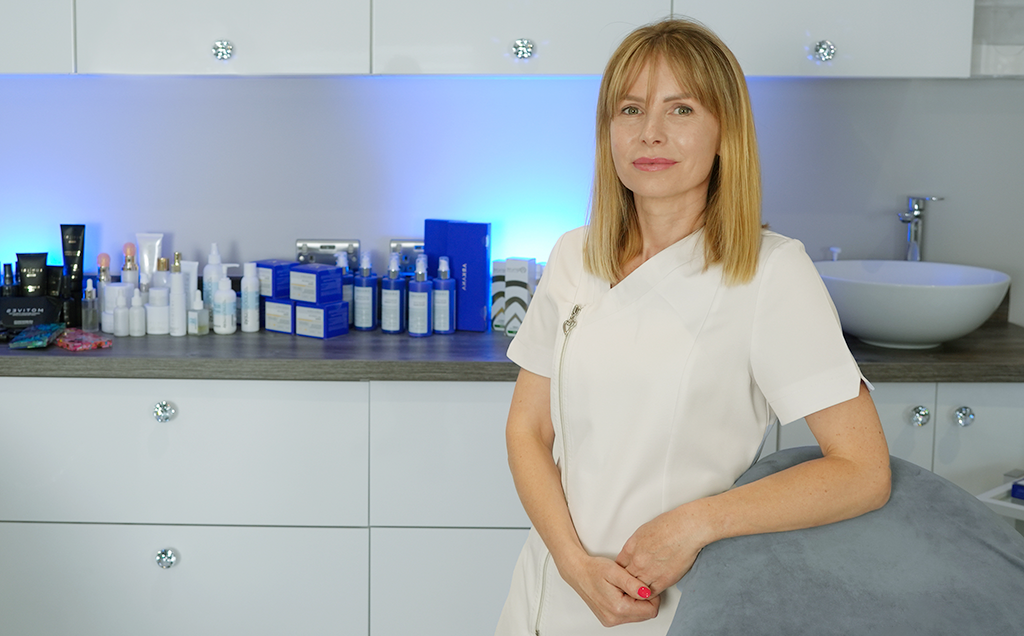
Professional consultation
Treatment compatibility is uppermost and I always undertake a professional consultation before undertaking Aesthetic treatments.
Please contact me on 07507 420244 to discuss any of my treatments and arrange an initial consultation.
